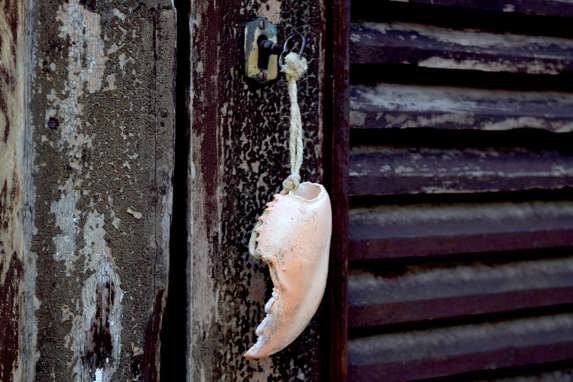
One of the two toilets in the privies is occupied. Try pulling the handle.
I need to go to the courtyard.
A row of Privies
In the yard behind the tobacco factory stands an outhouse containing two privy compartments. These were known as retirades and were shared by the residents of the surrounding houses. The term retirade comes from the French word meaning “to withdraw” or “retreat”. Many retirades were built in the towns and cities of the nineteenth century, but there were rarely enough of them to serve the growing number of newcomers.
The Barrel System
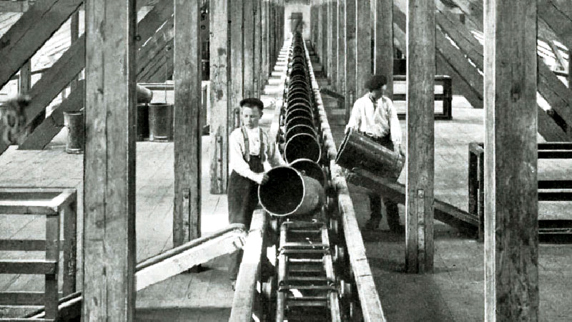
In many outhouses, the pits beneath the privy seats were replaced by barrels. From 1878 onwards, all property owners in Aarhus were required to use standardised, watertight barrels, partly to help prevent pollution and outbreaks of disease. Ideally, full barrels were to be transported outside the city, emptied and cleaned. In practice, however, many were simply emptied into a night-soil cart and returned to the privy without being cleaned.