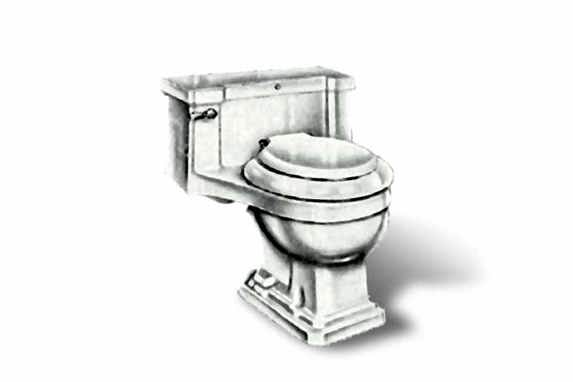
The toilet at the gynaecologist’s looks like the toilets we know today, where the cistern and bowl are integrated.
The triumphant march of the close-coupled toilet
A unified toilet
The toilet at the gynaecologist’s looks like the toilets we know today, where the cistern and bowl are integrated.
The close-coupled toilet
During the twentieth century, manufacturers developed toilets in which the cistern was placed closer to the bowl rather than mounted high above it. This model was quieter and considered more aesthetically pleasing, but it was also significantly more expensive. A further development of this trend led to the close-coupled toilet, in which cistern and bowl are fully integrated.

Tårnborg