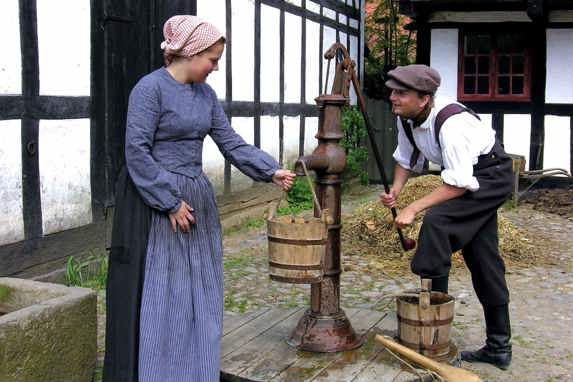
The merchant’s courtyard also has a “heart chamber”.
Filthy and unpleasant
Manure heap and privy
In the courtyard behind the merchant’s home and shop, the smell from the manure heap could be overpowering. In the opposite corner of the yard stood the privy, with the water pump placed between the two. Leakage from both the manure heap and the privy easily contaminated the drinking water, which is why both children and adults often preferred beer, coffee or tea when quenching their thirst.
Public health regulations
Widespread contamination of groundwater came from urban manure heaps, industry and human waste. Poor water quality also caused illness and death. Following a series of cholera epidemics in the 1850s, city councils in many places introduced measures to prevent seepage from manure heaps and privies.
Public health regulations required, among other things, that cesspits be completely watertight. In the beginning, however, enforcement was poor, and townspeople largely did as they pleased. As a result, the regulations had little immediate effect.
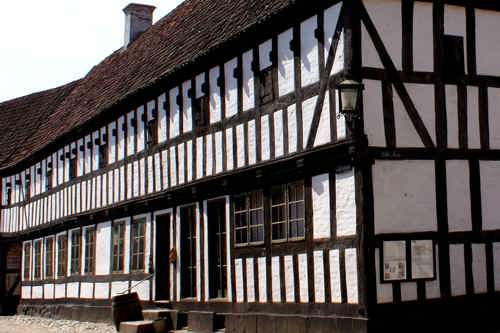
The Merchant's house
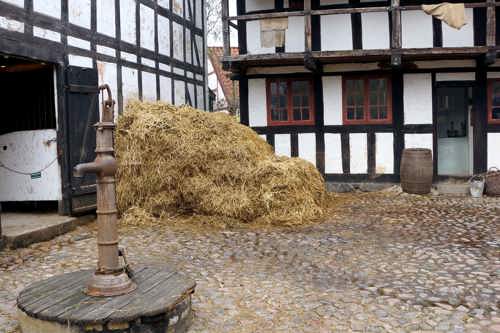
Today, the manure heap in the Merchant’s Courtyard mainly consists of horse manure.